Hurricane prep: the tree work that happens before the storm
Nearly half the Hurricane Sally insurance claims in Mobile and Baldwin counties involved a fallen tree. The storm doesn't choose at random. It takes the dead limbs, the lone pines and the over-extended oaks that were there to take. Prep is removing those.
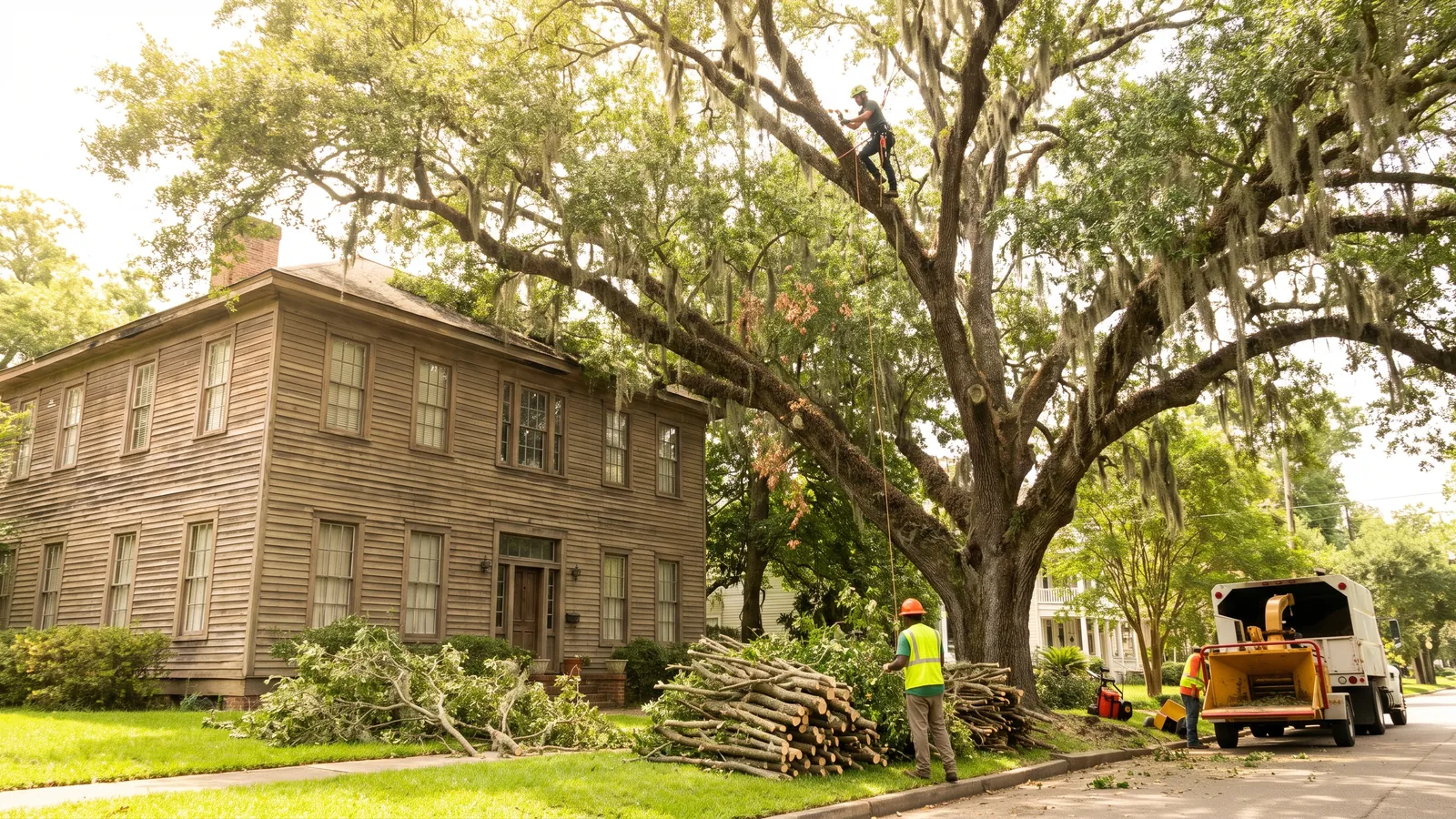
The University of Alabama's study of Hurricane Sally claims across more than 40,000 Mobile and Baldwin County homes found that nearly half the claims involved fallen trees, a risk the FORTIFIED roof program can't address. That number is the case for hurricane prep. A tree doesn't fail at random: it fails at the dead limb, the cracked fork, the long horizontal branch over the roof, the lone pine with shallow roots in saturated sand. Find those before June 1 and most of the risk is gone before the first named storm forms.
The University of Florida's hurricane research is the standard we work to. Correct pruning is the most important part of helping trees survive hurricanes: train young trees to one dominant trunk; remove dead and cracked branches; shorten overly long ones; thin the outer edge of the canopy, not the interior; take low limbs off the roof; and for trees taller than about 15 feet, have a certified arborist do the pruning before hurricane season and evaluate the trees about every two years. The same research names the trees that fail, trees with a high center of gravity, dense canopy, decayed trunk, two or more trunks or shallow roots, and the ones that survive, with the native live oak at the top of the list.
So a prep visit has two parts. The arborist walks the lot and grades every tree near a target: keep, prune, cable or remove. Then the crew does the work: deadwood and hangers out, reduction cuts on the limbs over the roof, canopy thinned at the edges on the oaks and pecans, a cable in the weak fork of a live oak worth keeping, and the pines that won't stand taken down before the wind does it. On a typical Mobile lot it's a day's work, it costs a fraction of one tree-on-the-roof claim, and it's the difference between a hurricane that's a cleanup and one that's a rebuild. The window is January through May. After June 1, you're pruning in the season.
What's included
Tree-by-tree hazard grading
Every tree near the house, the driveway and the lines graded keep, prune, cable or remove, in writing.
Deadwood and hangers out
The limbs that fall first, removed first.
Weight off the roof
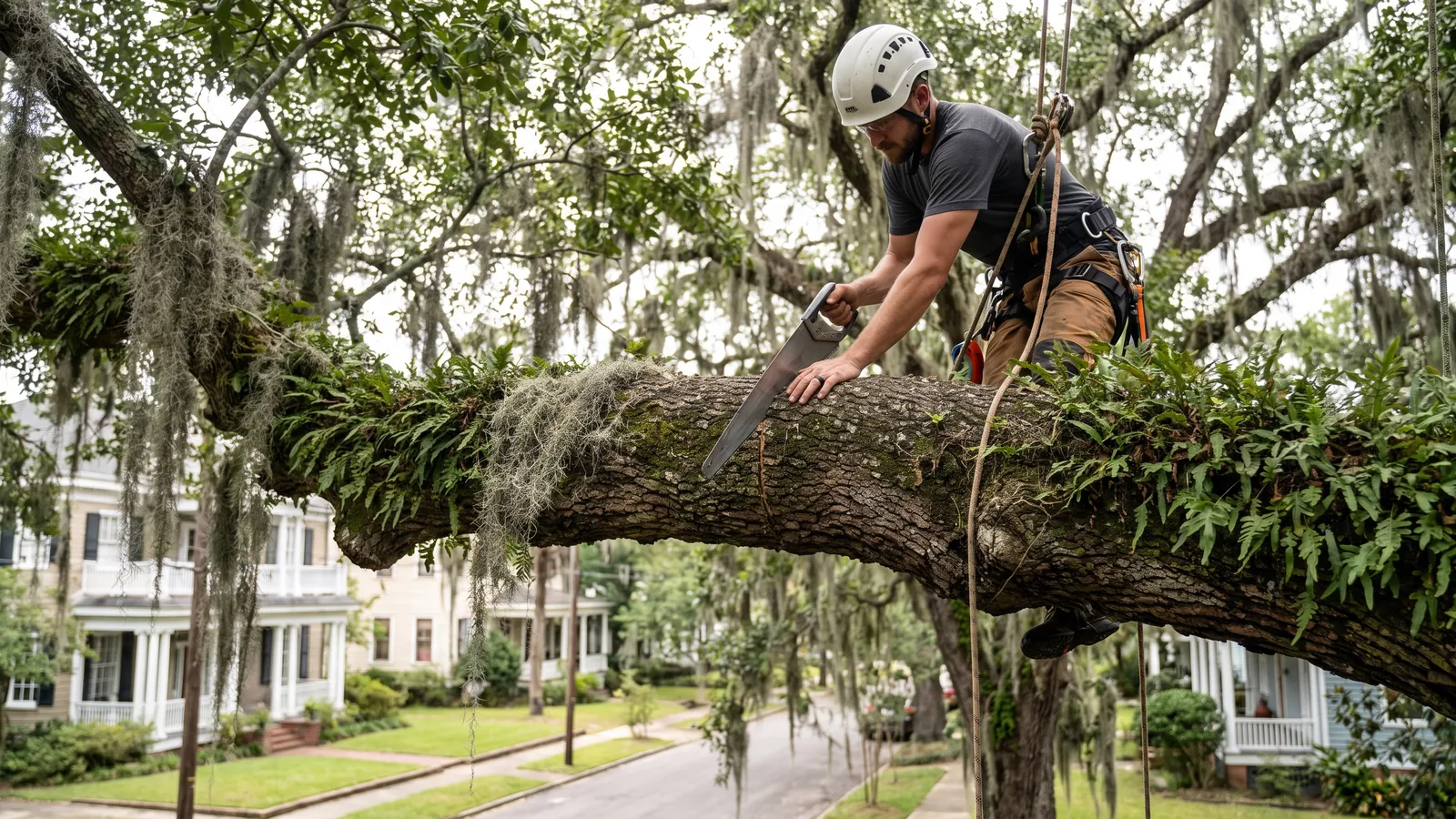
Reduction cuts on over-extended limbs over the house, the carport and the pool.
Outer-canopy thinning
Oaks and pecans thinned where the wind loads them, never gutted from the inside.
Cabling the keepers
Weak forks in live oaks worth saving braced with cable or rod.
Pines that won't stand, removed
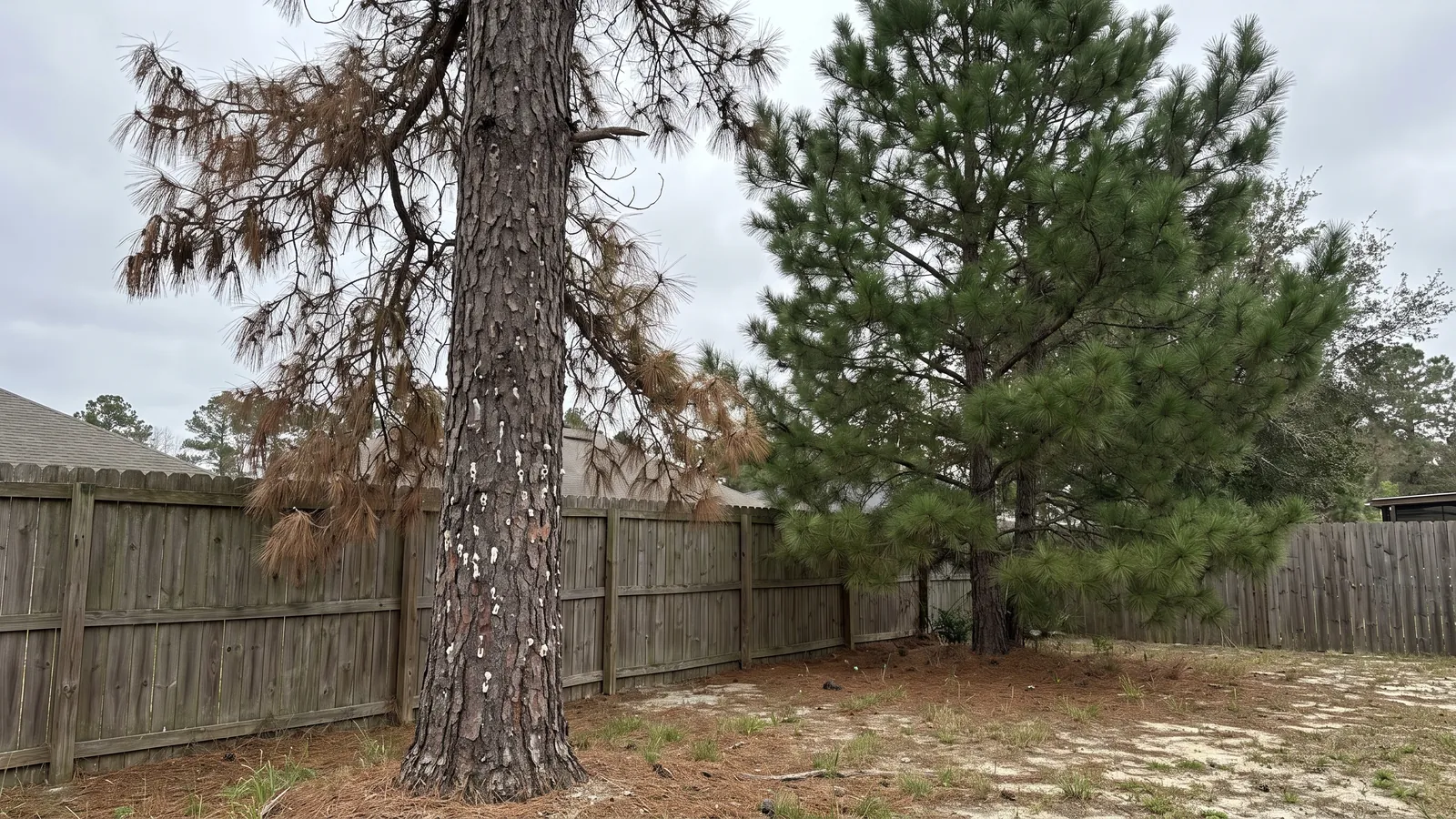
Leaning, lone and beetle-stressed pines near targets taken down before the season.
Hurricane tree preparation cost in Mobile, AL
| Job | Typical price | Notes |
|---|---|---|
| Hazard assessment, written report | $150 – $300 | Credited back if we do the work |
| Prep prune, medium tree | $350 – $900 | Deadwood, hangers, clearance, thinning |
| Prep prune, large live oak or pecan | $900 – $2,500 | Reduction cuts and thinning, climbed |
| Cable or brace, one fork | $600 – $1,800 | Inspected on a schedule |
| Pine removal before the season | $800 – $2,500 | See pine removal |
| Whole-lot prep, typical Mobile yard | $1,500 – $5,000 | Several trees, one day |
These are 2026 Mobile-area ranges to help you budget. Your written price is itemized (climb or bucket work, rigging, chipping and haul-off, stump grinding, crane time, the City permit when one applies) and good for 30 days.
Recent work
Questions we get about hurricane prep
When should hurricane prep be done?
January through May, with late winter the ideal for heavy pruning. Hurricane season starts June 1, and the big storms here have come in August, September and October. Work done in May still counts; work done in September is done in the season.
Which trees are most likely to fall?
Pines that grew in a stand and now stand alone, water and laurel oaks with hollow trunks, trees with two co-dominant trunks and a crack between them, anything with roots cut during construction, and trees in soil that stays wet. Live oaks, sabal palms, magnolias and bald cypress are the survivors.
Should I top my trees to make them safer?
No. Topping leaves stubs that rot and sprouts that break off in the first storm. Reduction cuts and outer-canopy thinning make a tree safer; topping makes it worse and ugly.
Is it worth cabling a live oak instead of removing it?
Usually, if the tree is otherwise sound. A cable above a weak fork and a rod through it takes most of the risk out, and you keep a tree that would take two centuries to replace. It needs an inspection every few years.
How much does prep save?
A single large tree through a roof is routinely a $20,000 to $60,000 claim once the roof, ceiling and contents are counted, before the deductible and the premium increase. A full-lot prep is a few thousand dollars. The Sally data from Mobile and Baldwin says nearly half of claims involved trees; prep is aimed at that half.
Do you do prep for HOAs, churches and businesses?
Yes. A tree-by-tree inventory with a priority list and a multi-year plan is the normal way to handle a campus or a subdivision's common areas.