Live oaks that have stood 300 years, and pines that fall in the next storm. We know which is which.
Tree removal, 24/7 hurricane and storm response, live oak pruning, pine removal, stump grinding, land clearing, crane work, palm trimming and replacement planting across Mobile and the Eastern Shore, by insured crews with an ISA Certified Arborist who pull the City permit when one applies and haul every limb away when the job is done.
ISA Certified Arborist on staff · General liability and workers' comp · Free estimates · Written price good for 30 days
The Gulf Coast tree calendar
When the wind comes, and when the work should be done.
Hurricane season
Hurricane-prep pruning and hazard checks
Pine beetle flight (watch your pines)
- Permit
- Right-of-way trees, Heritage Trees in historic districts, live oaks 18 in.+ on empty lots: $75 per tree
- Debris
- Contractor hauls it; the City won't take limbs over 12 in. across or 6 ft long
- Storm line
- Answered 24/7, trees on structures dispatched first
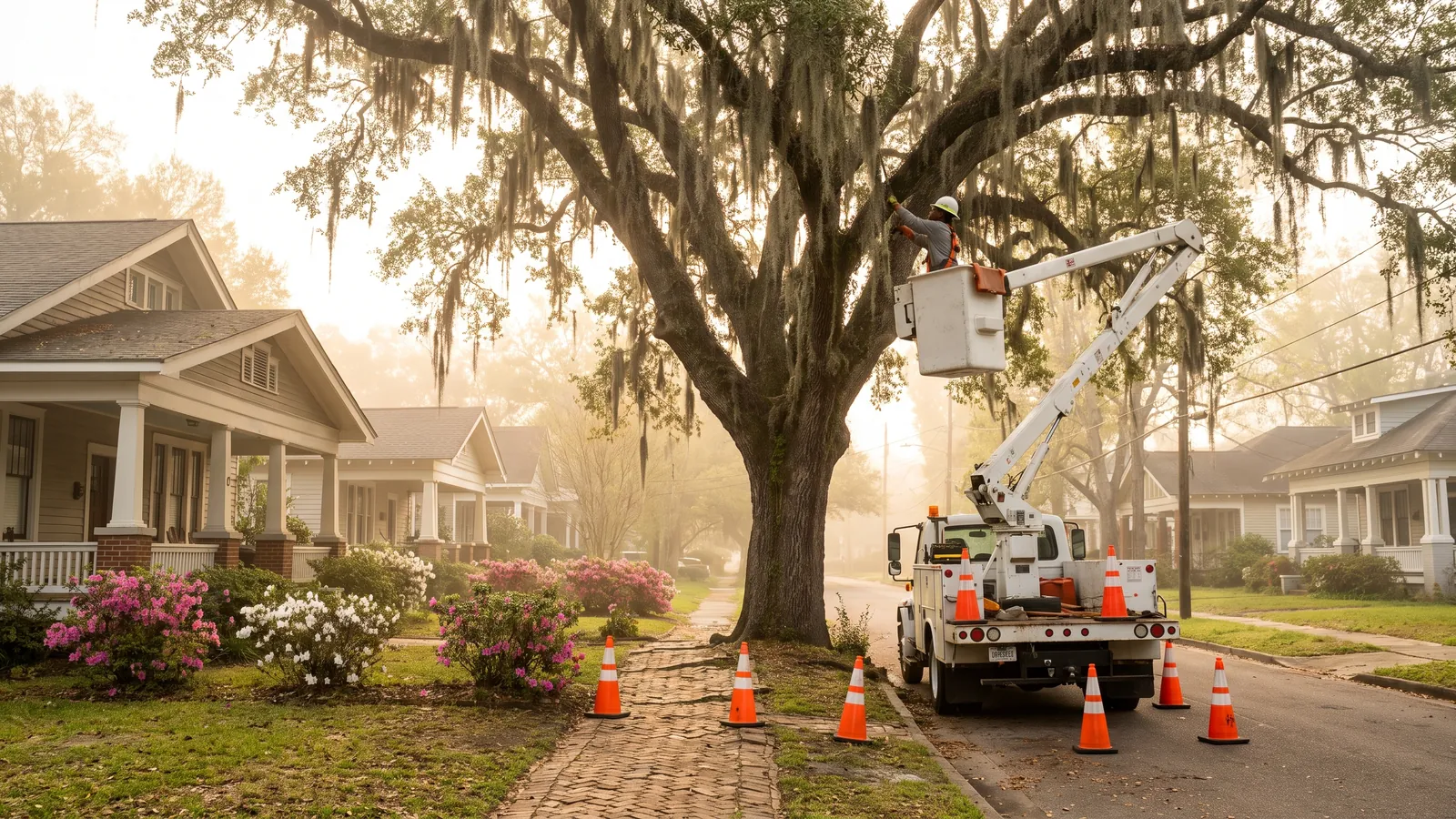
A tree company built for live oaks, tall pines and hurricane season
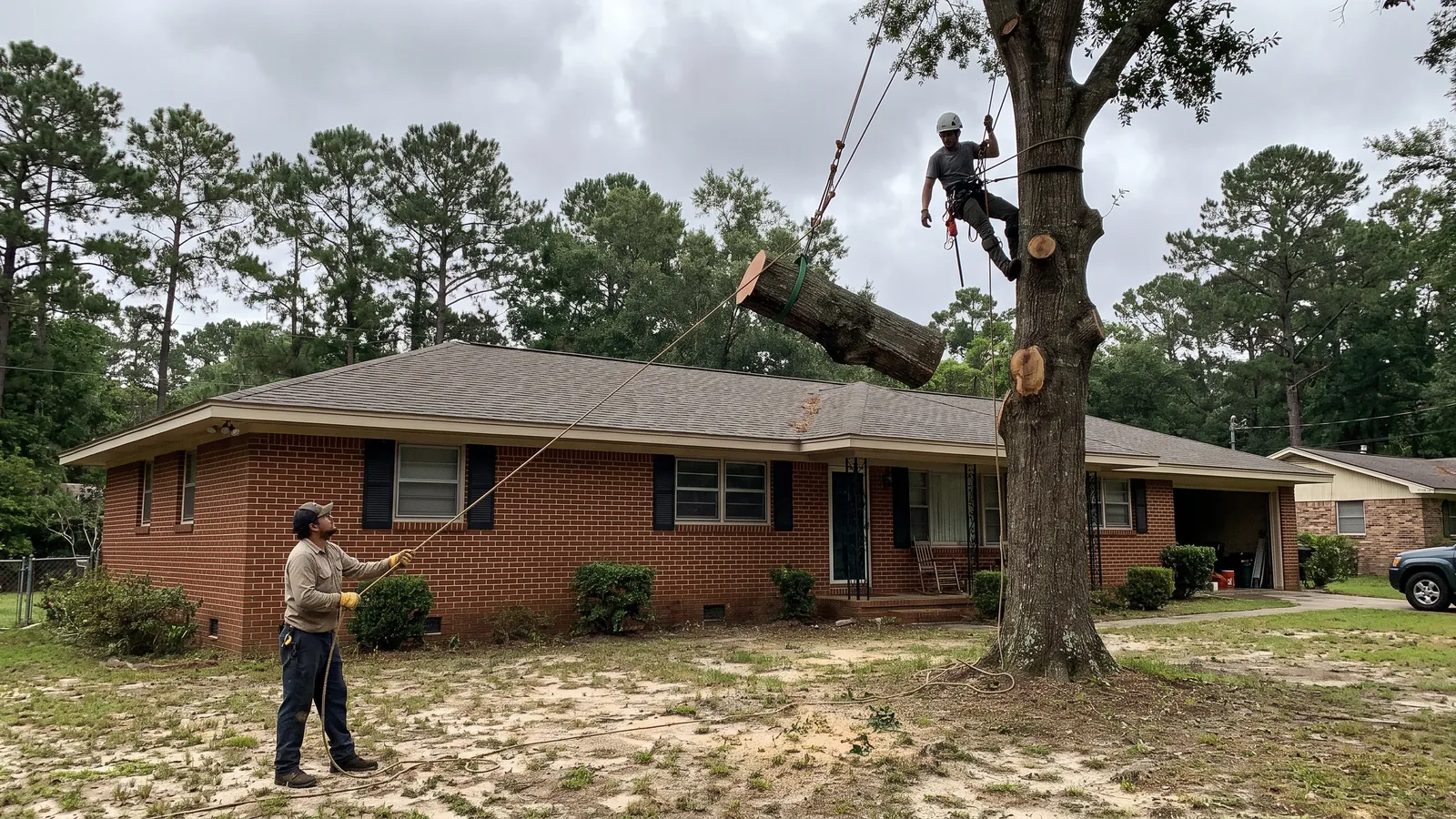
Tree removal
Water oaks, pecans, sweetgums, pines and the live oak that has finally outgrown its lot, rigged down in pieces over roofs and fences, chipped, hauled and raked.
Tree removal →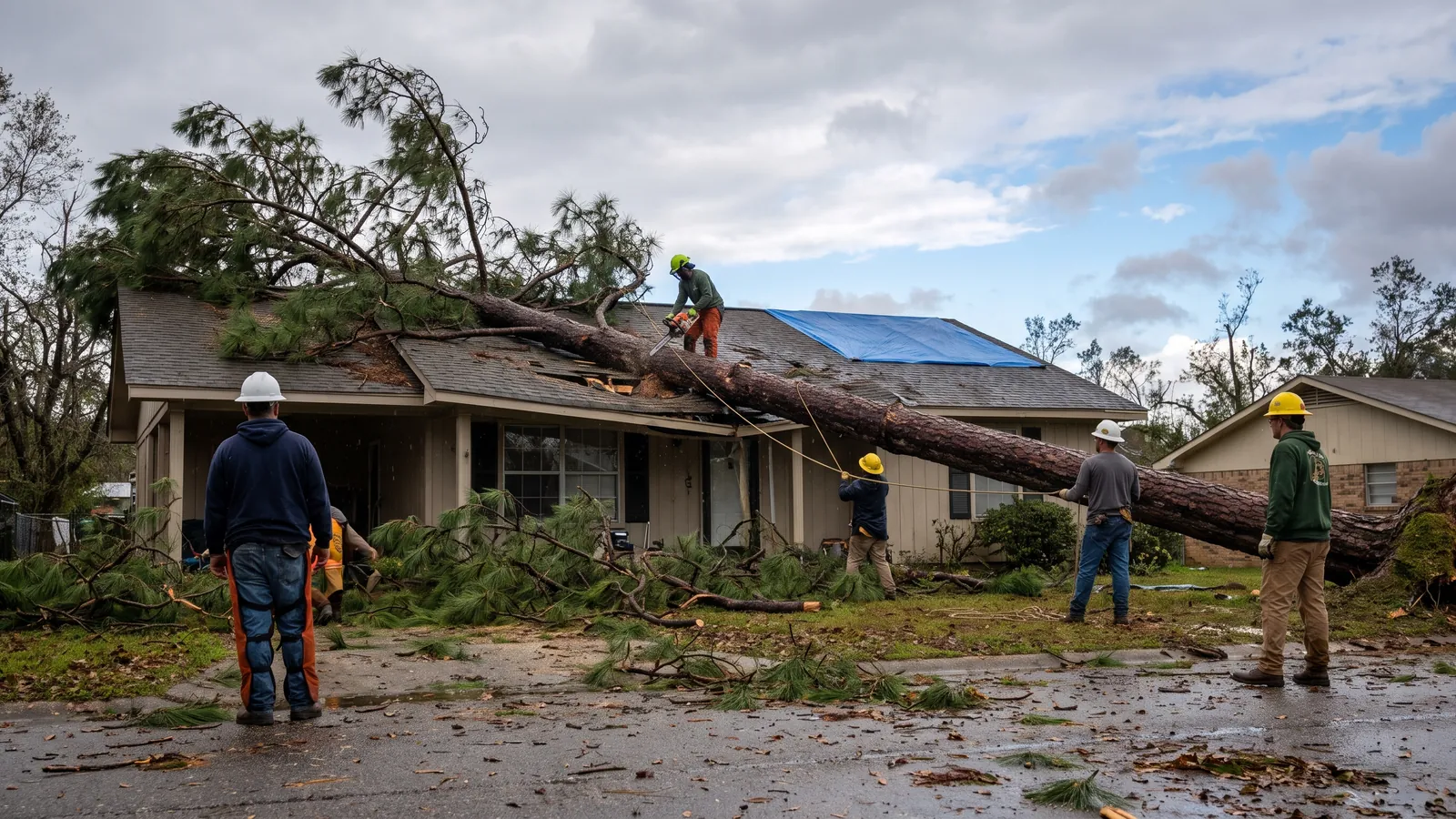
24/7 emergency tree service
A pine on the roof, a limb through the carport, a trunk across the driveway: dispatched by priority any hour, hurricane nights included.
Emergency service →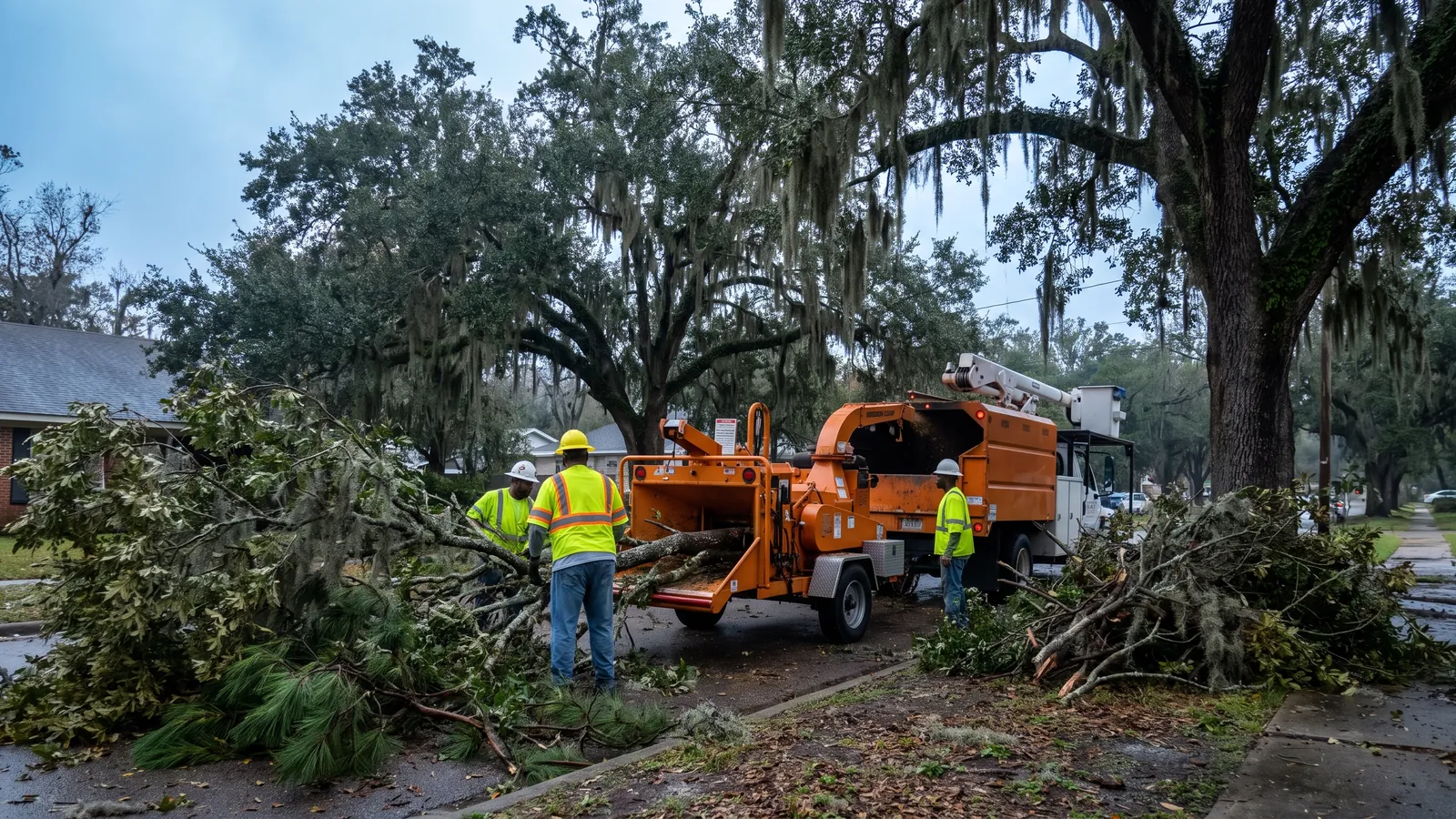
Hurricane & storm cleanup
Hangers, split trunks, leaning pines and the pile at the curb, cleared and hauled after the storm, with the City's debris rules handled for you.
Storm cleanup →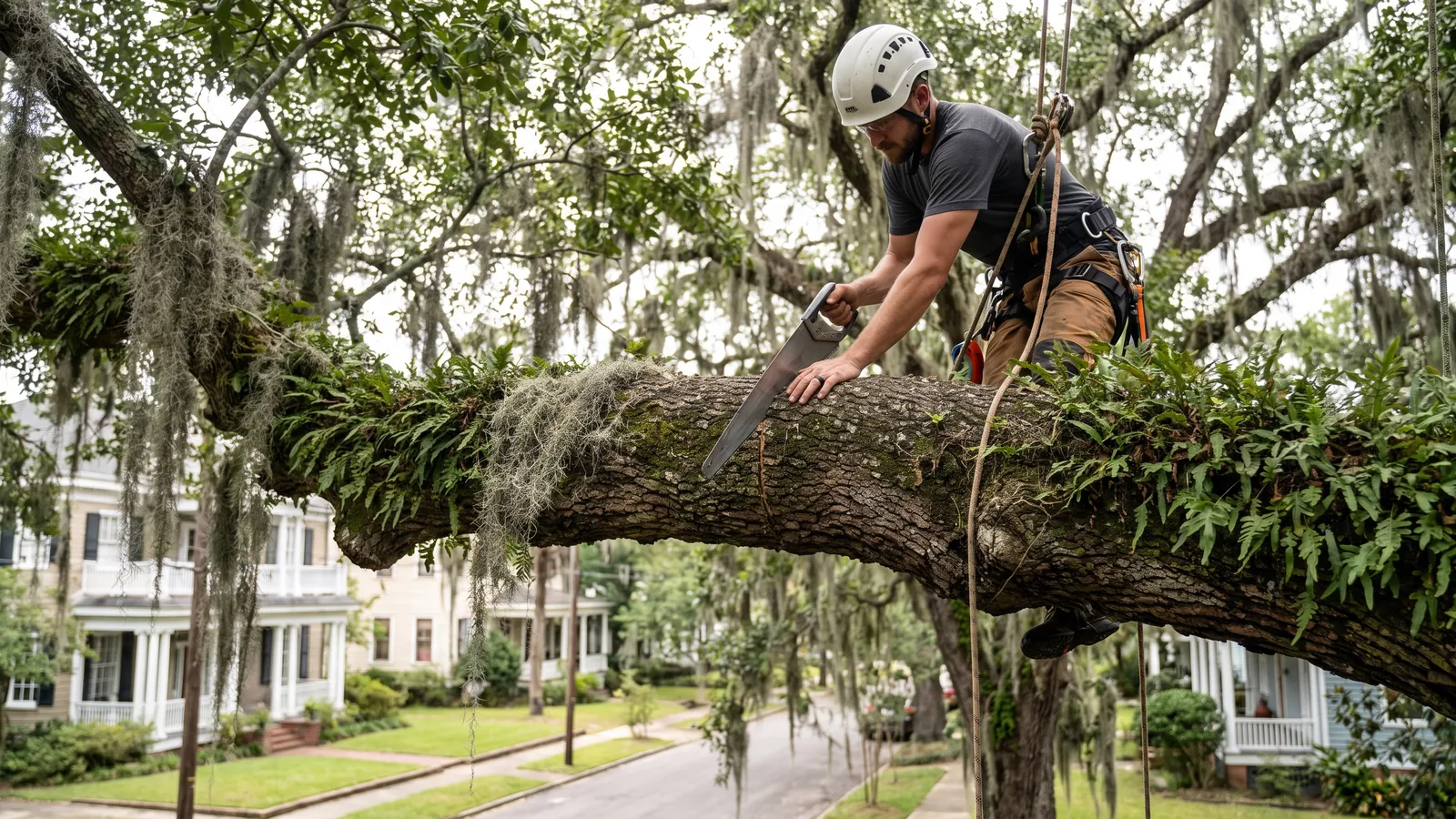
Live oak pruning
Deadwood, clearance over the roof and the street, weight taken off long horizontal limbs, with the cuts a 300-year tree deserves.
Live oak pruning →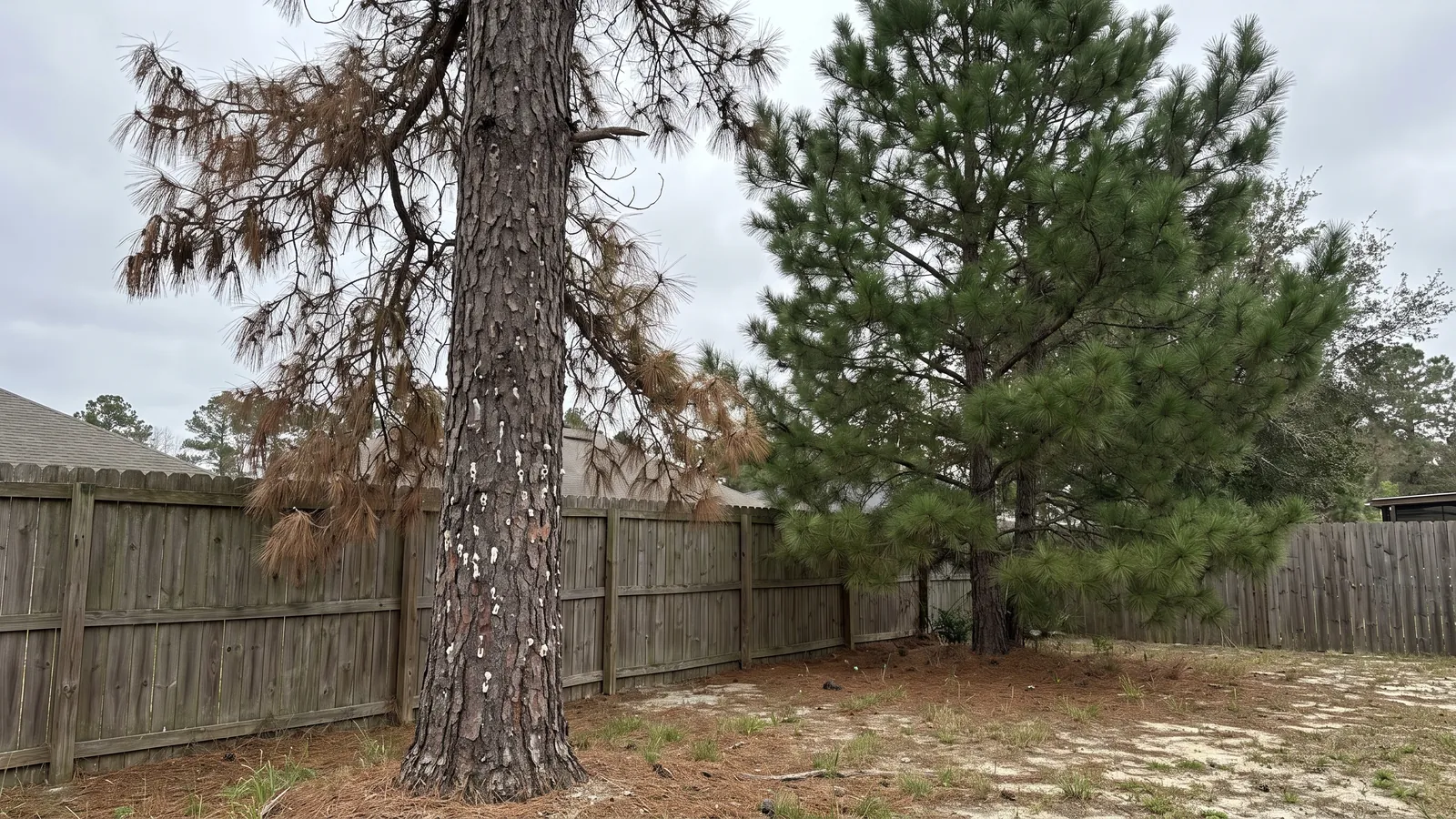
Pine tree removal
Leaning loblollies, beetle-killed pines with pitch tubes and faded crowns, and the tall thin ones left standing alone after a lot was cleared.
Pine removal →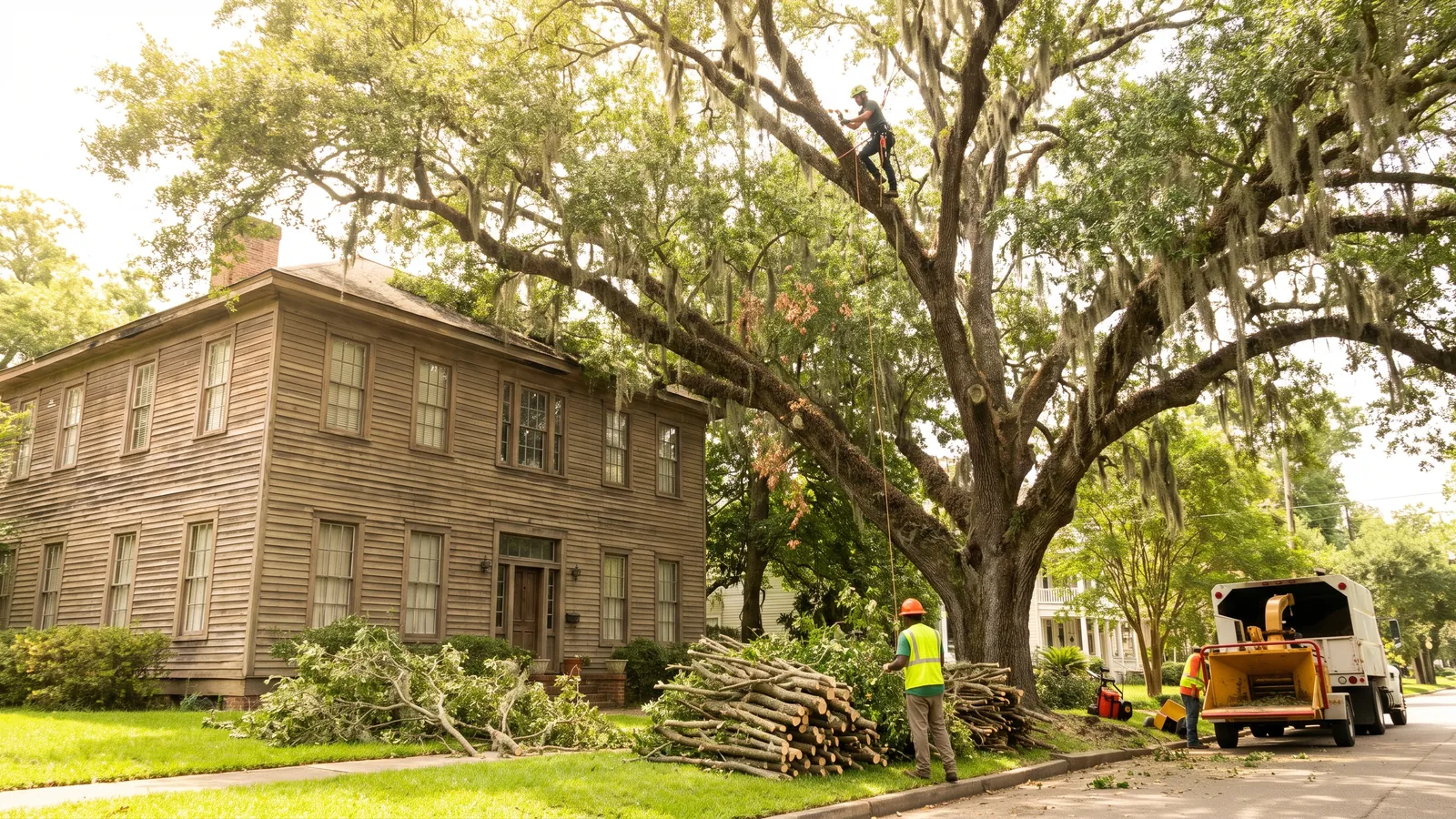
Hurricane prep pruning
Canopy thinning, dead and cracked limbs out, low limbs off the roof, done before June 1 so the trees that stay can take the wind.
Hurricane prep →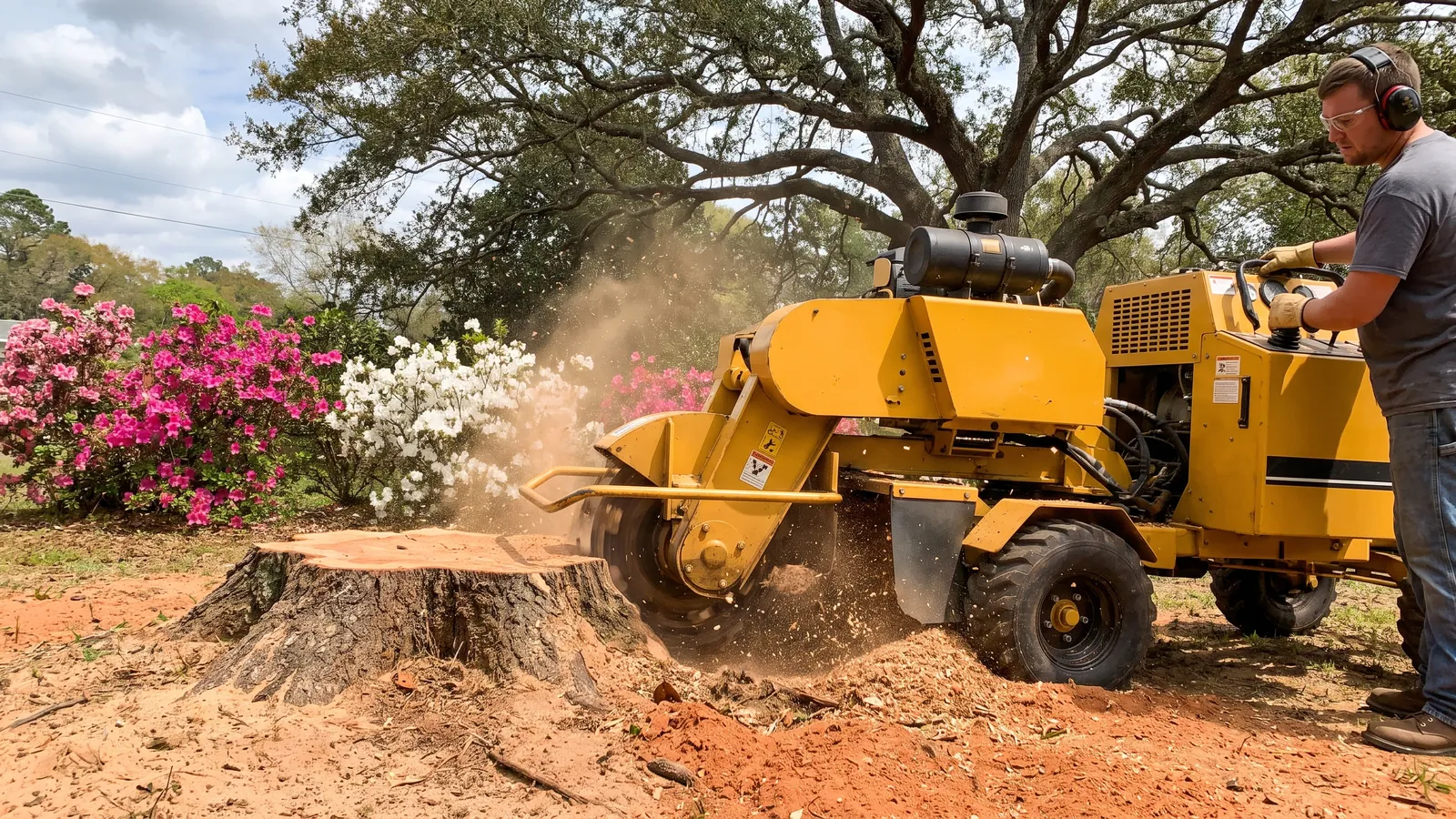
Stump grinding
Ground below grade, chips hauled or left, Alabama 811 called before we dig, ready for grass or a new tree.
Stump grinding →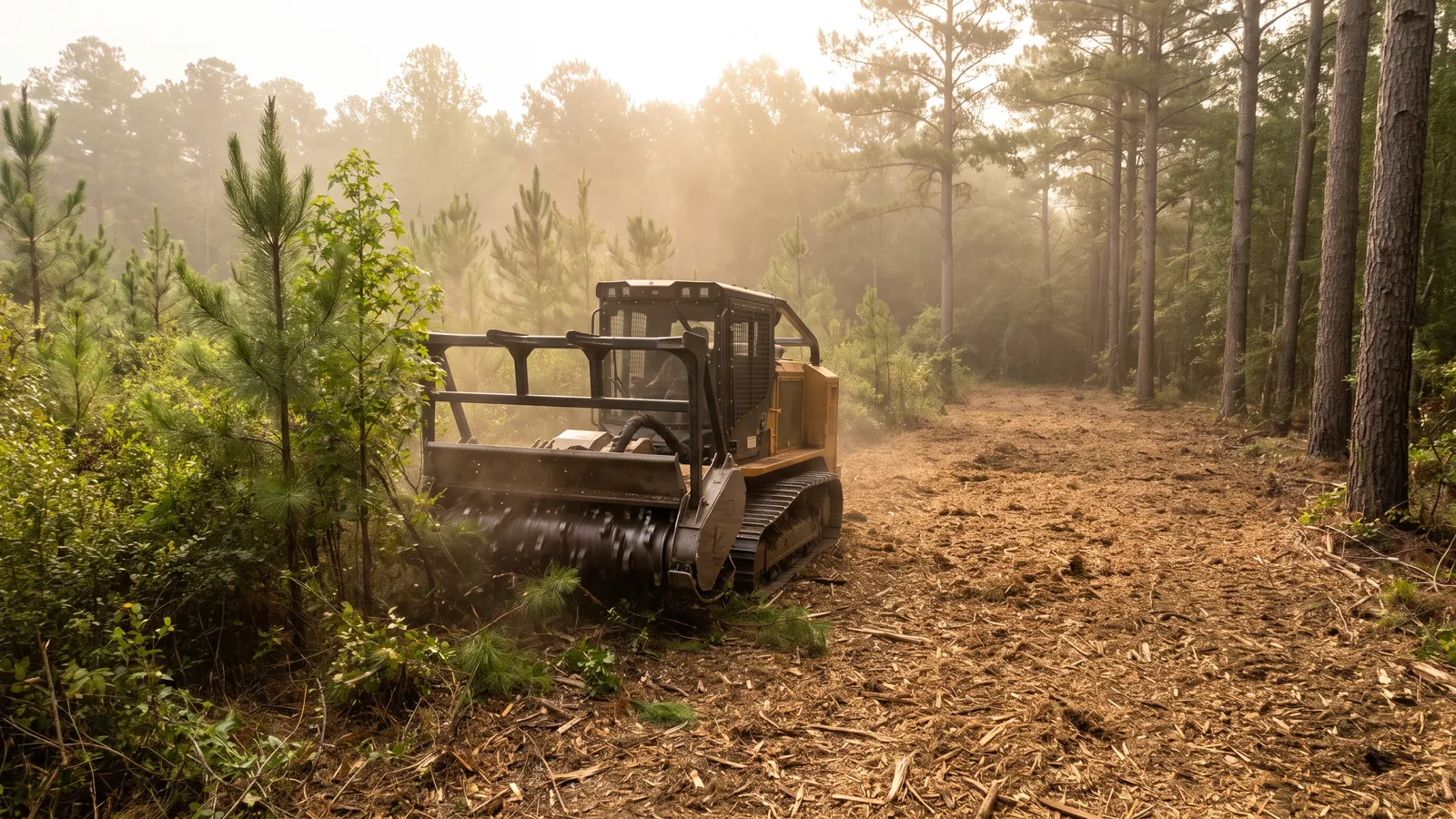
Land & lot clearing
Forestry mulching and selective clearing for home sites, pastures and overgrown acreage in west Mobile, Semmes and the Eastern Shore.
Land clearing →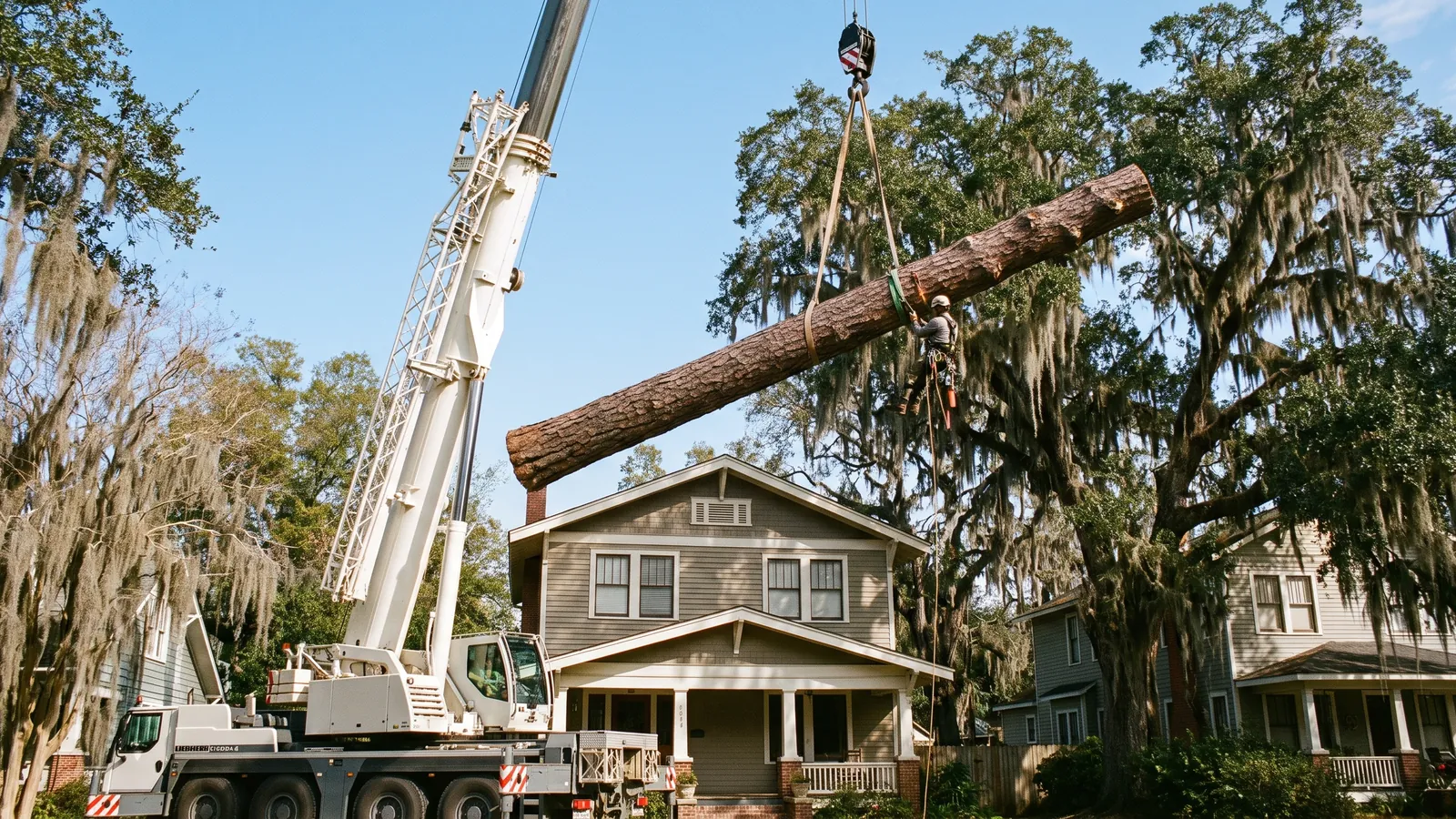
Crane tree removal
Big pines and oaks over houses on tight Midtown and Spring Hill lots, lifted out in sections instead of dropped.
Crane removal →Three numbers behind most Mobile tree calls
Mobile gets more rain than almost any big city in the country, sits at the end of hurricane alley, and grows some of the oldest live oaks in the South alongside some of the tallest, thinnest pines. Here is what that adds up to.
Of rain a year
The National Weather Service in Mobile puts the city's average at just over 66 inches, ahead of most if not all larger metro areas. Saturated sandy soil is why tall pines go over in wind that a dry yard would shrug off.
Gust at Mobile Regional during Sally
Hurricane Sally came ashore at Gulf Shores on September 16, 2020 as a Category 2 crawling at 3 mph. The airport gusted to 81, Dauphin Island to 97, and the City counted more than 100 trees down by that night.
Per tree, when a permit applies
Right-of-way trees, Heritage Trees of 8 inches or more in the historic districts and live oaks of 18 inches or more on undeveloped lots need a Mobile Tree Commission permit. A developed lot outside a historic district needs none.
Four trees that keep our phone ringing
Loblolly & slash pine
Tall, slender, shallow in sand and the first thing on a roof in a hurricane. The 2024 southern pine beetle epidemic, the worst in Alabama in 23 years, is still killing them from the top down.
Pine removal →Water oak & laurel oak
Fast-growing, short-lived and hollow by middle age. The City leaves water oak off its Heritage Tree list for a reason. They shed big limbs in summer storms long before they fall.
Tree removal →Southern live oak
The survivor. The Duffie Oak has stood about 300 years with a 126-foot spread. The risk is never the whole tree; it's a long horizontal limb over the roof, a hollow fork, or roots cut for a driveway.
Live oak pruning →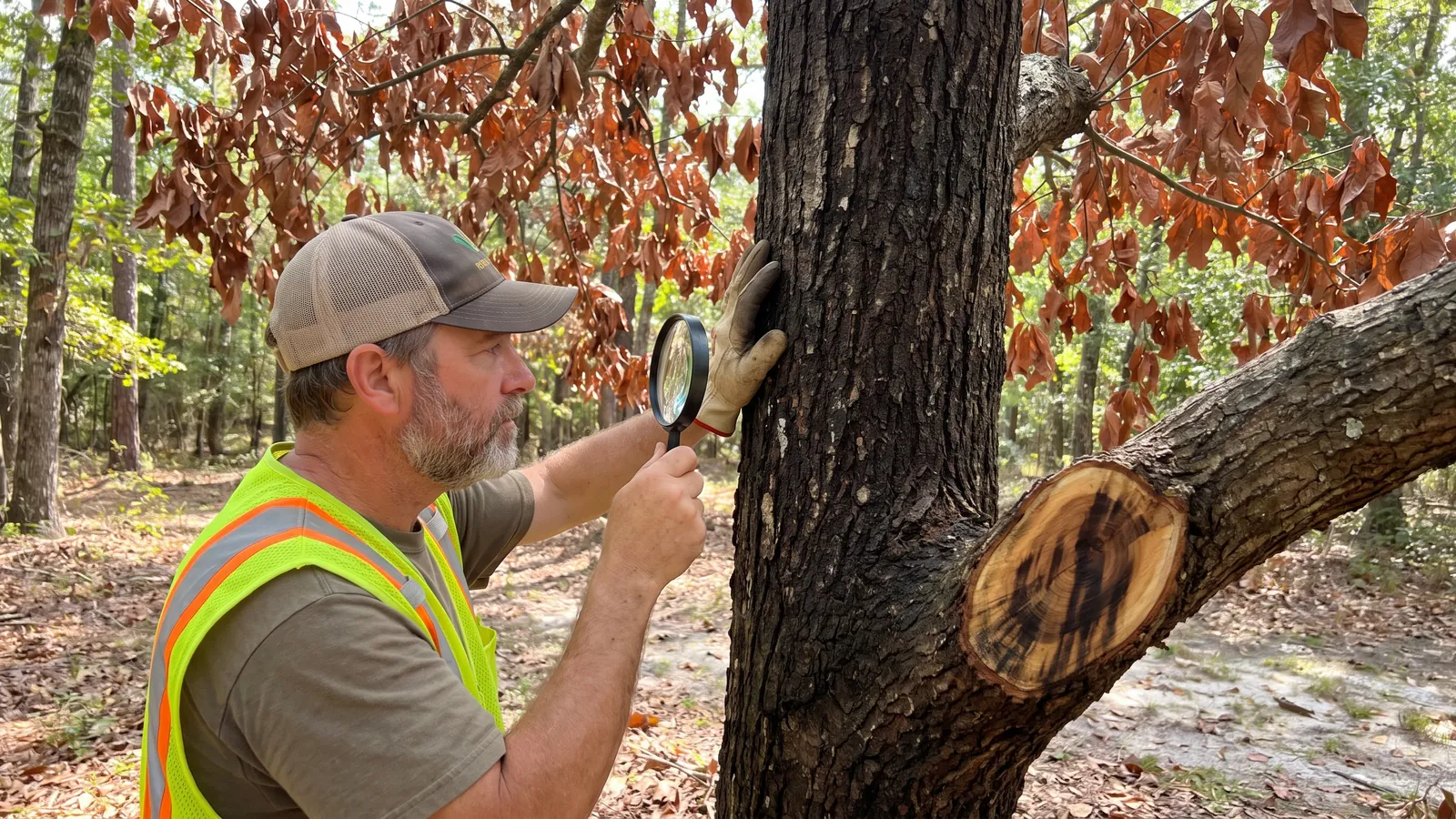
Redbay & sassafras
Laurel wilt, carried by a beetle the size of a grain of rice, kills a redbay in 4 to 12 weeks. The brown leaves hang on for a year, and the wood has to be chipped fine and left on site.
Tree health →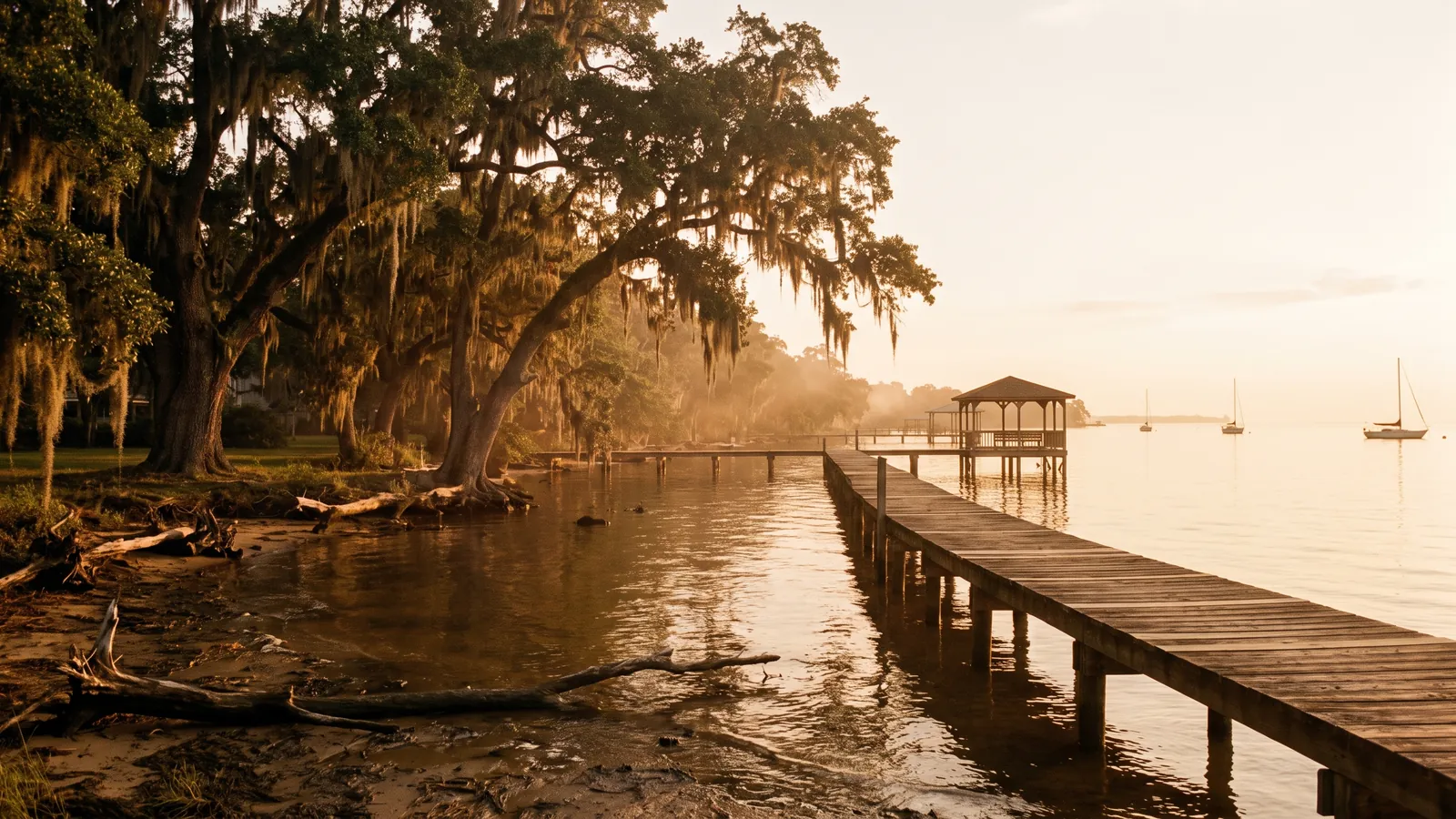
A port city that measures its history in live oaks and its weather in hurricanes
Mobile's live oaks are the city's oldest living landmarks. The Duffie Oak in Midtown is about 300 years old, 31 feet around and 126 feet across, recognized by the Alabama Forestry Commission as a famous and historic tree. The City protects trees like it: any tree on the street side of the sidewalk belongs to the City and needs a Tree Commission permit, and inside the historic districts a Heritage Tree, oaks included, is protected from 8 inches across. We work inside those rules and pull the permit when one applies.
Then there's the wind. Frederic came over Dauphin Island as a Category 4 in 1979 with a 12- to 15-foot surge. Elena's eyewall snapped pines across Mobile and Baldwin counties in 1985. Ivan came ashore just west of Gulf Shores at 1:50 a.m. on September 16, 2004 at 120 mph and pushed Mobile Bay into downtown. Sally crawled ashore at 3 mph on the same date in 2020. And this October, Isaias put Mobile and Baldwin counties under a Hurricane Warning with 55- to 75-mph gusts forecast from Theodore to Fairhope. We've cleaned up after storms like these, and we answer the phone when they happen.
Underneath it all is 66 inches of rain a year on sandy coastal soil. That is why a pine that grew up in a stand goes over once the lot around it is cleared, why roots stay shallow where the water table is high, and why half the Hurricane Sally insurance claims in Mobile and Baldwin counties involved a fallen tree. Knowing which trees to take down before the season, and which to leave alone, is most of the job.
Four steps, no surprises
Call or send the form
A leaning pine, a limb on the carport, a live oak that needs weight taken off, a lot to clear: tell us what you're seeing. We answer around the clock.
An estimator walks the property
Usually within a day or two, faster after a storm. They identify the tree, measure the trunk, check the canopy, the forks and the roots, look at what it would hit, and check the address against the City's permit map.
Written, itemized price
Removal, pruning, stump grinding, haul-off, crane time and the permit fee, each on its own line. No deposit until you approve and we schedule.
Done in a day, raked like we weren't there
Most residential jobs take a day. Everything is chipped and hauled, the lawn raked, the stump ground if you asked, and photos sent the same evening.
From the Oakleigh Garden District to Fairhope, Semmes and Grand Bay
We work across Mobile every week: Midtown and the historic districts where the oldest oaks and the strictest tree rules are, Spring Hill's big wooded lots, west Mobile's subdivisions cut out of pine stands, Tillmans Corner and Theodore toward the bay, and the annexed neighborhoods that joined the city in 2023.
Beyond the city we cover Semmes, the fastest-growing city in Mobile County, Saraland, Satsuma and Creola up Highway 43, Prichard and Chickasaw, Grand Bay and Bayou La Batre on the south end, and the Eastern Shore across the bay: Daphne, Fairhope and Spanish Fort, which have their own tree ordinances and some of the fastest growth in Alabama.
Questions Mobile homeowners ask us
How much does tree removal cost in Mobile?
For 2026 budgeting: a small tree under 30 feet runs about $250 to $600, a typical yard pine or water oak of 40 to 60 feet about $700 to $1,800, and a big live oak, pecan or 80-foot pine over the house $2,000 to $5,000 or more. Storm work and crane work cost more because the tree is already broken and sitting on something. Stump grinding and haul-off are separate lines on our written price, and the City's $75 permit is added only when the tree needs one.
Do I need a permit to cut down a tree in Mobile?
On a developed residential lot outside a historic district, no, as long as the tree isn't in the public right-of-way. The City says plainly that no permit is required there. You do need a Mobile Tree Commission permit for any tree on the street side of the sidewalk, for a Heritage Tree of 8 inches or more inside a historic district, and for a live oak of 18 inches or more on an undeveloped lot. The permit is $75 per tree, capped at three trees ($225) for a residence. We check the address on the City's My Place map and pull the permit when one applies.
What do I do if a tree is on my house after the hurricane?
Get everyone out from under it and call us. We answer 24 hours a day, including the night a storm comes ashore. A tree on a structure is dispatched first. Photograph everything before anything is cut, because your insurer will want the pictures, and don't let anyone climb a tree that's loaded on a roof or tangled in a power line. If a line is involved, Alabama Power has to make it safe first.
Why do pines fall and live oaks don't?
Mostly roots and shape. Tall, slender pines that grew up in a stand relied on their neighbors for support, so once a lot is cleared around them they stand alone in wind they were never braced for, in sandy soil that goes soft when it's saturated. A live oak is low, wide and deep-rooted, which is why the University of Florida lists it as a survivor species. That said, a live oak with a hollow trunk, co-dominant stems or roots cut during construction is a different animal, and we'll tell you if yours is one.
Can you take the wood and limbs away, or will the City pick them up?
We haul everything. The City's rules are specific: limbs over 12 inches across or over 6 feet long aren't collected as household trash, piles can't exceed 2 cubic yards, and when a contractor does the work, the contractor is responsible for the debris, not you. It goes to the landfill or gets chipped on site, and the lawn is raked before we leave.
Do you really answer at night?
Yes, 24 hours a day, every day of the year, hurricane nights included. Your call is answered at any hour, emergencies are dispatched by priority (people trapped or a tree on a structure first), and the paperwork happens after the tree is off the house.